Frozen shoulder, also known as adhesive capsulitis, causes pain, stiffness, and limited movement in the shoulder joint. It develops gradually and can greatly impact daily life, especially for people with desk jobs, homemakers, and those recovering from an injury. Understanding the 4 stages of frozen shoulder is vital because each stage presents different symptoms and requires a slightly different approach to care, such as physiotherapy and exercise.
This guide will help you learn how the condition progresses, how to identify your stage, and what to expect during recovery.
What is Frozen Shoulder?
Frozen shoulder occurs when the connective tissue around the shoulder joint becomes inflamed and stiff. Over time, this leads to limited movement and pain.
The condition usually develops slowly and can last from several months to a couple of years if not properly managed.
What is the Root Cause of Frozen Shoulder?
Many people wonder about the main cause of frozen shoulder.
The exact cause isn’t always clear, but several factors increase the risk:
- Prolonged shoulder immobility after injury or surgery
- Diabetes or thyroid disorders
- Poor posture, especially in desk jobs
- Lack of regular shoulder movement
- Age between 40 and 60 years
- More common in women
In cities like Kolkata, where long work hours, a sedentary lifestyle, and stress are prevalent, cases of frozen shoulder are rising steadily.
What are the Hallmark Signs of a Frozen Shoulder?
Before understanding the stages, it’s important to recognize the early signs.
Common symptoms include:
- Persistent shoulder pain, especially at night
- Difficulty lifting the arm overhead
- Pain while getting dressed or brushing hair
- Stiffness that gradually worsens
- Reduced range of motion
These symptoms often start mildly but can worsen over time if ignored.
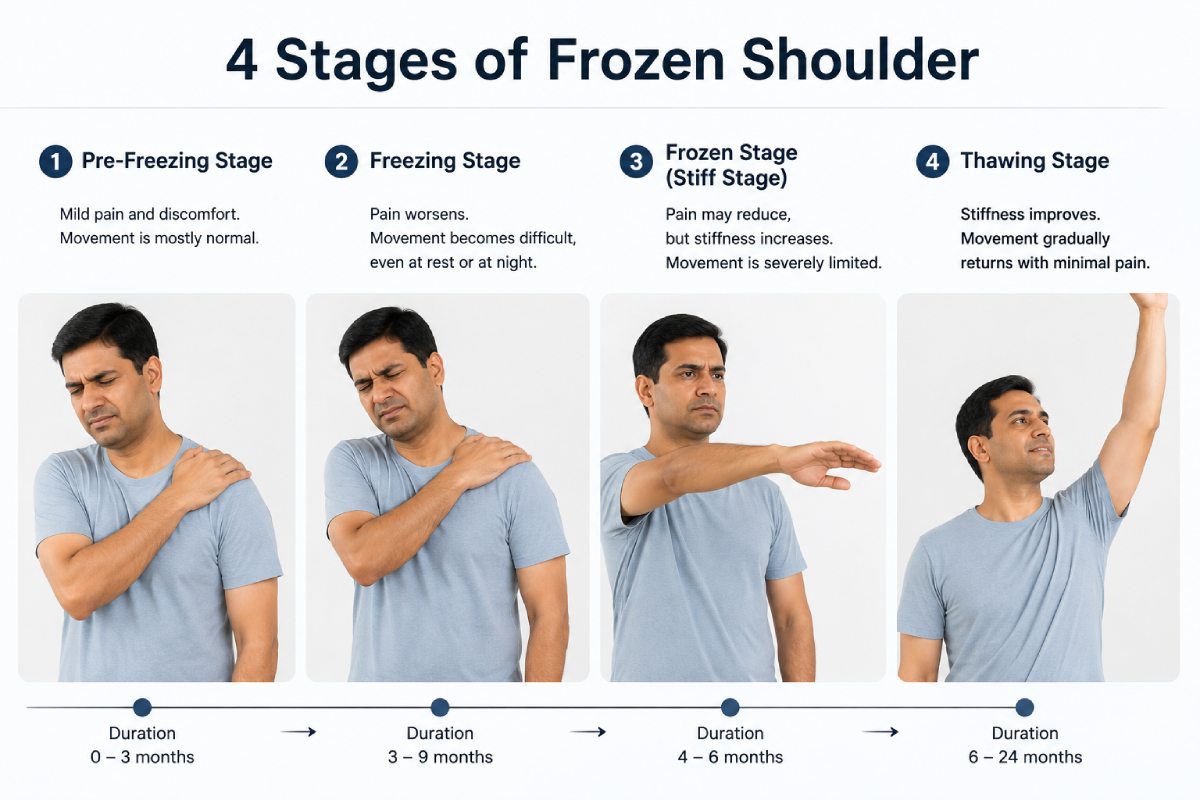
The 4 Stages of Frozen Shoulder
Frozen shoulder progresses through four distinct stages. Each stage has different symptoms and recovery patterns.
1. Pre-Freezing Stage of Frozen Shoulder
This is the earliest stage and often goes unnoticed.
Symptoms:
- Mild shoulder pain
- Slight discomfort during movement
- Pain increases with activity
- Range of motion is mostly normal
At this stage, many people overlook the pain, thinking it results from strain or poor sleeping posture.
What to Do:
Early intervention is crucial here. Gentle exercises and posture correction can prevent the condition from worsening.
2. Freezing Stage of Frozen Shoulder
This stage is when the condition becomes more noticeable and painful.
Symptoms:
- Increasing shoulder pain
- Pain even at rest or during the night
- Gradual loss of shoulder movement
- Difficulty with daily tasks
This stage can last from 6 weeks to 9 months.
Frozen Shoulder Freezing Stage Treatment:
- Pain management
- Controlled mobility exercises
- Avoiding complete rest
- Starting physiotherapy
In this stage, many people stop using their shoulder due to pain, which actually worsens stiffness.
3. Frozen Stage (Stiff Stage)
In this stage, pain may decrease slightly, but stiffness becomes the primary issue.
Symptoms:
- Significant restriction in shoulder movement
- Difficulty lifting or rotating the arm
- Less pain compared to the freezing stage
- Daily activities become challenging
This stage can last 4 to 6 months.
What Helps in This Stage:
- Regular exercises
- Stretching and mobility work
- Gradual strengthening exercises
- Consistent physiotherapy
Even though pain is less, many people feel frustrated because movement is severely restricted.
4. Thawing Stage of Frozen Shoulder
This is the recovery phase.
Thawing Stage of Frozen Shoulder:
- Gradual return of shoulder movement
- Reduced stiffness
- Improved function
- Minimal pain
This stage can last from 6 months to 2 years, depending on the consistency of treatment.
Focus During This Stage:
- Progressive strengthening
- Mobility restoration
- Functional training
- Long-term consistency
Proper physiotherapy is essential for regaining full movement.
How Do I Know What Stage My Frozen Shoulder Is?
Identifying the stage depends on your symptoms:
- More pain, less stiffness → Freezing stage
- Less pain, more stiffness → Frozen stage
- Improving movement → Thawing stage
However, proper assessment is crucial because many shoulder conditions can feel similar.
4 Stages of Frozen Shoulder Treatment
Treatment depends on the stage of the condition.
Early Stage:
- Pain control
- Gentle movement
- Posture correction
Freezing Stage:
- Controlled exercises
- Avoid overuse
- Guided physiotherapy
Frozen Stage:
- Stretching exercises
- Joint mobility work
- Strength training
Thawing Stage:
- Functional training
- Strength building
- Full movement restoration
Consistency is key. Skipping exercises or stopping midway can delay recovery.
Is Frozen Shoulder Fully Curable?
A common question is whether frozen shoulder is fully curable.
Yes, in most cases, frozen shoulder is completely recoverable. However:
- Recovery takes time
- Consistency is important
- Early intervention helps speed up recovery
Without proper care, stiffness may linger for a long time.
How to Cure Frozen Shoulder Quickly?
Many people look for quick fixes, but frozen shoulder doesn’t have an instant cure.
However, recovery can be faster if you:
- Start early physiotherapy
- Follow a regular exercise routine
- Avoid complete rest
- Maintain proper posture
- Stay consistent with treatment
Rushing recovery or forcing movement can make the condition worse.
Role of Frozen Shoulder Physiotherapy
Physiotherapy is one of the most effective frozen shoulder treatment approaches.
It helps with:
- Reducing pain
- Improving mobility
- Restoring strength
- Preventing long-term stiffness
A structured plan is essential because random exercises may not be effective.
Effective Frozen Shoulder Exercise
Some commonly recommended movements include:
- Pendulum exercises
- Wall climbing exercise
- Towel stretch
- Shoulder rotation movements
These exercises should be done carefully and regularly.
Avoid aggressive stretching, especially in the early stages.
Daily Life Challenges in Kolkata Lifestyle
In Kolkata, many lifestyle habits contribute to shoulder issues:
- Long sitting hours
- Poor workstation setup
- Carrying heavy bags on one shoulder
- Lack of physical activity
- Ignoring early pain
Addressing these habits is equally important along with treatment.
When Should You Take It Seriously?
You should not ignore shoulder pain if:
- It lasts more than 2 to 3 weeks
- You cannot lift your arm properly
- Pain increases at night
- Daily activities become difficult
Early attention can prevent progression to severe stages.
Final Thoughts
The four stages of frozen shoulder illustrate how the condition gradually evolves from mild pain to severe stiffness and then recovery.
Understanding these stages helps with:
- Identifying symptoms early
- Taking the right approach at the right time
- Avoiding long-term complications
Frozen shoulder is manageable and often fully recoverable, but patience and consistency are crucial.
By focusing on the right frozen shoulder treatment, including physiotherapy and consistent frozen shoulder exercises, you can regain normal movement and return to your daily routine without discomfort.