That pain in your neck is constant, right? It does not matter whether you work from home or travel to your workplace in Sector V; the stiffness and pain do not seem to go away. The good news? Simple neck pain exercises done correctly can give you relief faster than you think.
Let’s talk about practical exercises that work, not complicated routines you won’t be able to follow.
Why Your Neck Hurts (And Why It’s Getting Worse)
Your neck really isn’t designed for what we’re doing to it these days. Eight to ten hours hunched over a laptop, constantly looking down at your phone, sleeping on the wrong pillow, stress that makes you unconsciously tense up-all this adds up.
Your neck muscles work overtime just to hold your head up. No wonder they scream for help.
Are These Exercises Right for You?
These exercises for neck pain work for most people who deal with everyday stiffness and discomfort. If your pain gets worse after sitting for long hours or you wake up one morning with a stiff neck, this is where you’ve come to the right place.
However, if you have recently had an accident or experience severe pain radiating to the arms or numbness and tingling, consult a physiotherapist first.
Neck Pain Best Exercise: Chin Tucks
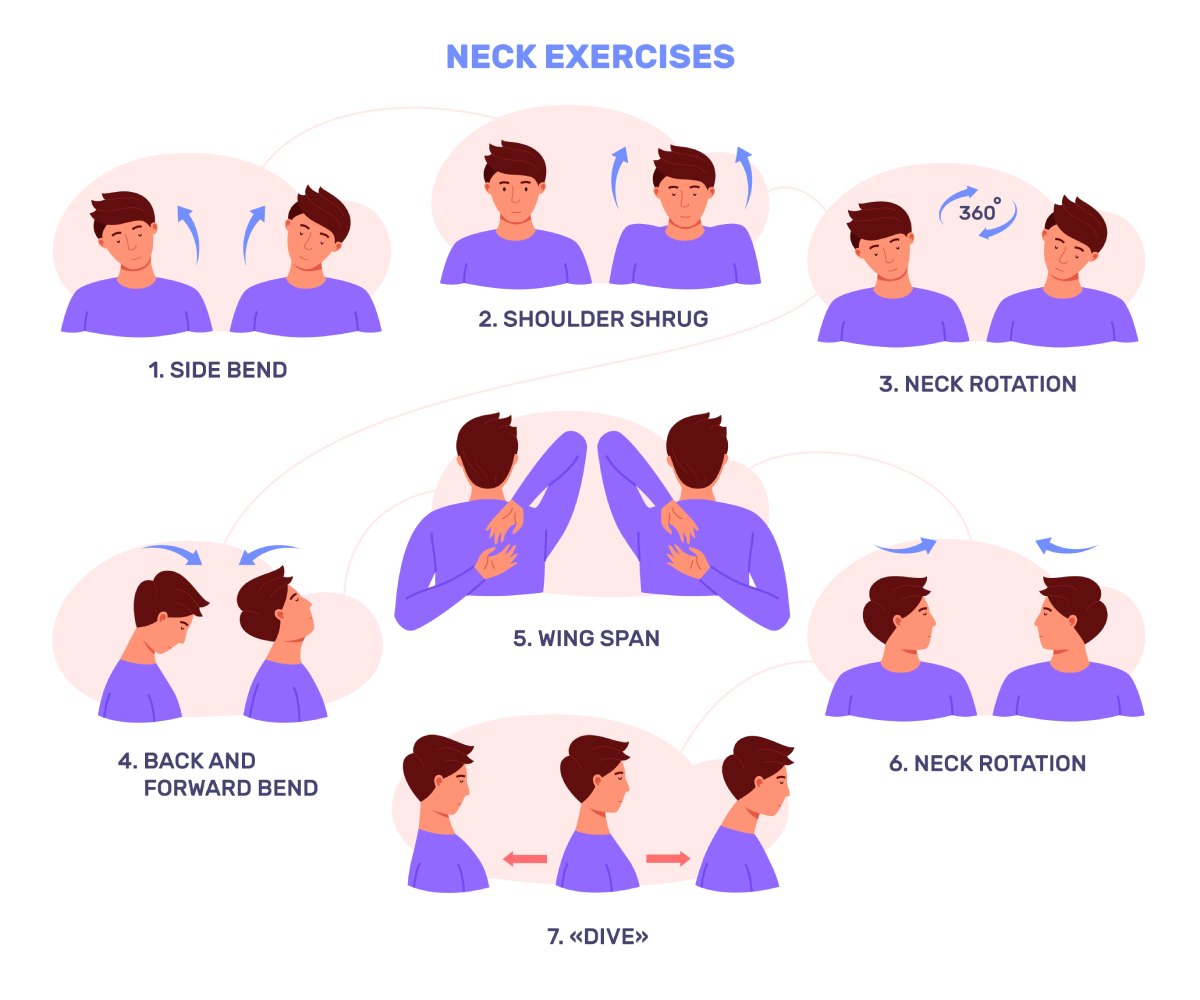
If I had to recommend just one exercise for neck pain relief, this would be it. Chin tucks are incredibly simple yet effective.
How to do it: Sit up straight or stand with good posture. Gently pull your chin straight back – imagine someone is pressing a finger on your chin, pushing it backward. You’re not looking down or up, just moving your head straight back.
You’ll feel a stretch at the back of your neck and might look like you have a double chin.
That’s perfect!
Hold for 5 seconds, then relax.
Do 10 repetitions.
Why it works: This exercise strengthens the deep muscles in your neck that support your head. You are directly counteracting that forward head posture that we all develop from staring at screens. Do this 3-4 times daily, especially during work breaks.
Neck Rotation: Simple yet Powerful
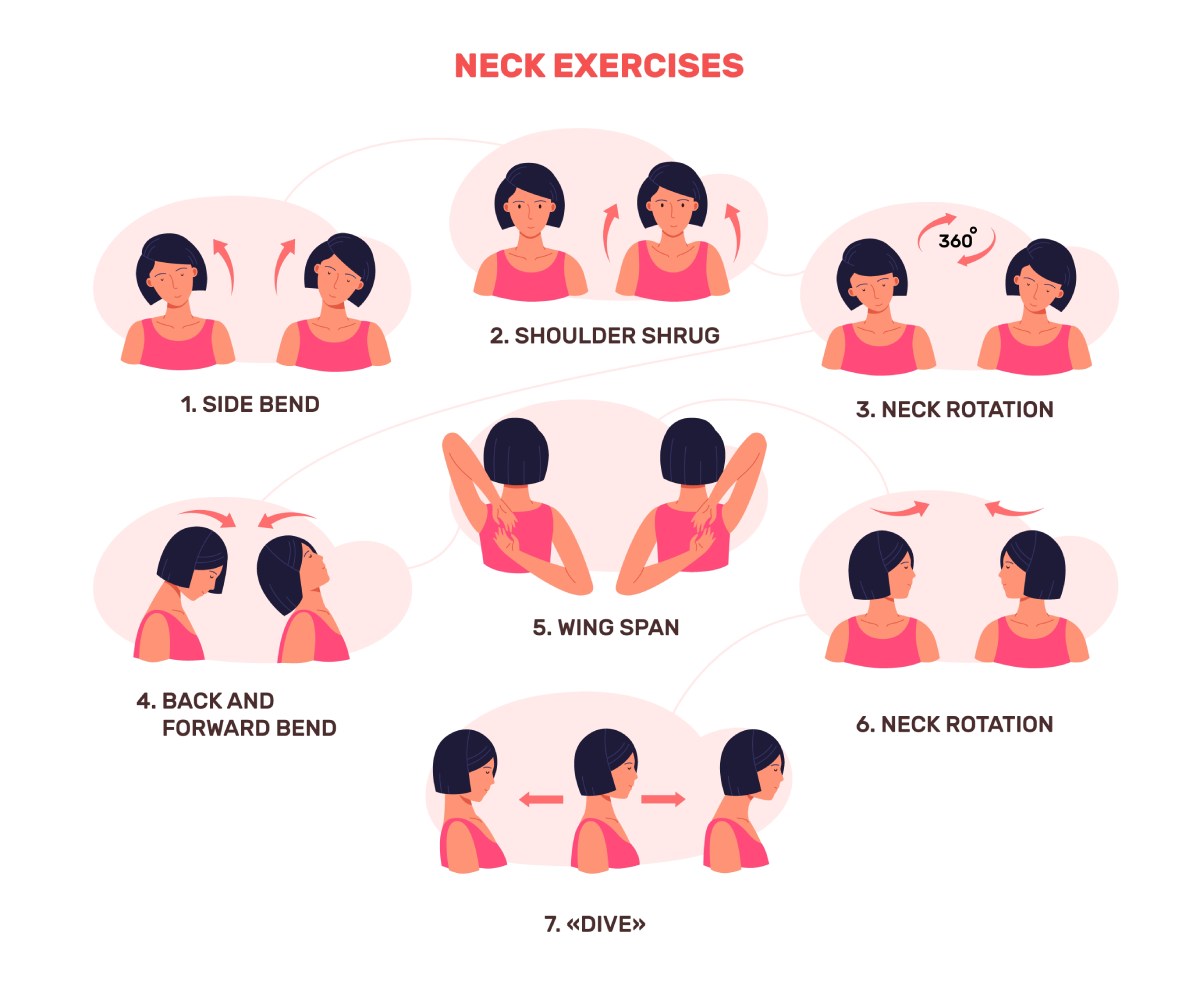
This is one of the best exercises to relieve pain in the neck and shoulders, as it addresses stiffness and improves mobility.
How to do it: Sit comfortably with shoulders relaxed. Slowly turn your head to the right, as if you are trying to look over your shoulder. Go as far as feels comfortable; don’t force it.
Hold for 3 seconds.
Return to center.
Now turn to left and hold. Do 5 rotations on each side, 2-3 times daily.
Common mistake: Moving too fast or jerking your head. This should be slow and smooth.
Shoulder Blade Squeeze- For Neck and Upper Back Relief
This works wonders for your neck because neck pain is always accompanied by tension in the shoulders.
How to do it: Sit or stand keeping good posture. Visualize that there is a pencil between your shoulder blades. Squeeze your shoulder blades together as if you were trying to hold that imaginary pencil.
Your chest will naturally open up. Hold for 5-10 seconds, then relax. Do 10 repetitions, 3 times daily.
Many clients in Shape and Strength, Kolkata, have reported instant relief in their neck and shoulder regions once the above is done regularly.
Upper Trapezius Stretch – Release Those Knots
You know those painful knots at the top of your shoulders, where your neck meets your shoulder? Well, this is the stretch that hits just that area.
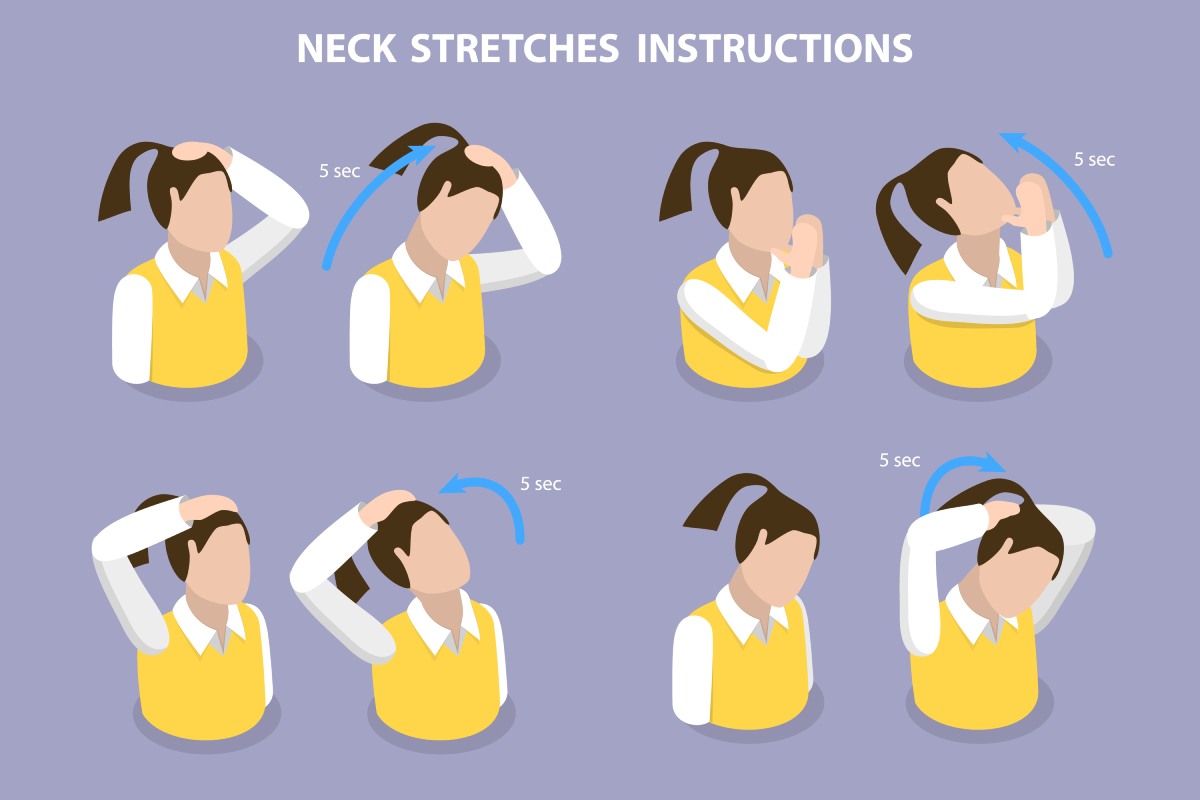
How to do it: Sit in a chair. Reach your right hand overhead and lightly place it on the left side of your head. Gently lean your head towards your right shoulder.
Let your left arm dangle. You should feel a good stretch from your neck down towards your shoulder.
Hold for 20-30 seconds.
Breathe normally.
Switch sides.
Repeat this 2-3 times to each side, twice daily. This is one of the best stretching exercises for neck pain because it relieves tension developed from stress and poor posture.
Neck Side Bends – For Lateral Flexibility
How to do it: Sit or stand straight. Slowly tilt your head to your right, bringing your right ear towards your right shoulder. Do not lift your shoulder to meet your head.
You will feel a mild stretch along the left side of your neck. Hold for 15-20 seconds. Return to center and repeat on the other side.
Do 3 repetitions on each side, twice daily.
Important Tip: Never push on the head with your hand unless a physiotherapist has demonstrated safe technique for you.
Which Exercise Will Work Fastest for You?
Here’s the honest answer, given what is causing your pain:
For desk workers, chin tucks and shoulder blade squeezes provide the quickest relief. Do them every couple of hours when at work.
For morning stiffness, neck rotations and side bends straight out of bed work wonders.
For stress-induced tension, the upper trapezius stretch brings almost instant relief to those tight, knotted muscles.
The secret isn’t in finding that one magic exercise; it is in doing these consistently. Even 10 minutes spread out throughout your day makes a huge difference.
Your Daily Routine
Morning (5 minutes):
- Chin tucks: 10 reps
- Neck rotations: 5 each side
- Neck side bends: 3 each side
During work, every 2-3 hours:
- Shoulder blade squeeze: 10 counts
- Chin tucks: 10 reps
Evening:
- Upper trapezius stretch: 2-3 each side
That’s just 15-20 minutes spread throughout your day. Totally doable, right?
Quick Tips for Success
Do start gently; breathe normally; be consistent; and do not continue if you experience sharp pains
Don’t: Make forceful movements; do full head circles because they could compress nerves; expect the results to appear overnight.
Beyond Exercises – What Else Helps
These simple changes work best with exercises:
Fix your workstation: Screen at eye level, not looking down constantly.
Check your pillow: Use one that keeps your neck aligned with your spine.
Stay hydrated: Dehydrated muscles cramp more easily.
Take breaks: If you have a desk job, get up and move every 30-40 minutes.
Manage stress: Deep breathing helps. Stress shows up as neck tension before you even realize it.
How Long Before You See Results?
Most people notice some improvement within the first week-less stiffness when turning your head, reduced pain intensity, and better range of motion. It usually takes 2-4 weeks of daily practice for significant improvement to take place.
For chronic neck pain that’s been bugging you for months, you may need 6-8 weeks to notice significant improvements. Remember, you’re retraining muscles that have been working incorrectly for a long time.
When to Seek Professional Help
Start with these exercises, but if pain has not been improved within 3-4 weeks of regular practice, pain is getting worse, you have numbness or tingling in the arms, are getting frequent headaches, or daily activities become difficult, consider seeing a physiotherapist.
These cervical exercises for neck pain are combined with manual therapy and modern techniques like kinesiology taping when exercises alone need extra support by Dr. Yogitaa Mandhyaan at Shape and Strength in Kolkata.
The Bottom Line
Neck pain may be common, but it does not have to be your normal. These physiotherapy exercises for neck pain can significantly reduce your discomfort, when regularly performed, and prevent it from coming back.
Start small: choose 2-3 exercises that feel right for you and do them daily.
You’re gonna be amazed how fast your neck starts feeling better. It carries your head all day long-about 5-6 kg. So it does deserve a little care.
A few minutes of exercises are a small investment against painless mobility.
Which exercise are you going to begin with today?
And remember: if you have extreme or worsening neck pain, it’s always best to consult a qualified physiotherapist in your area for proper guidance and treatment.