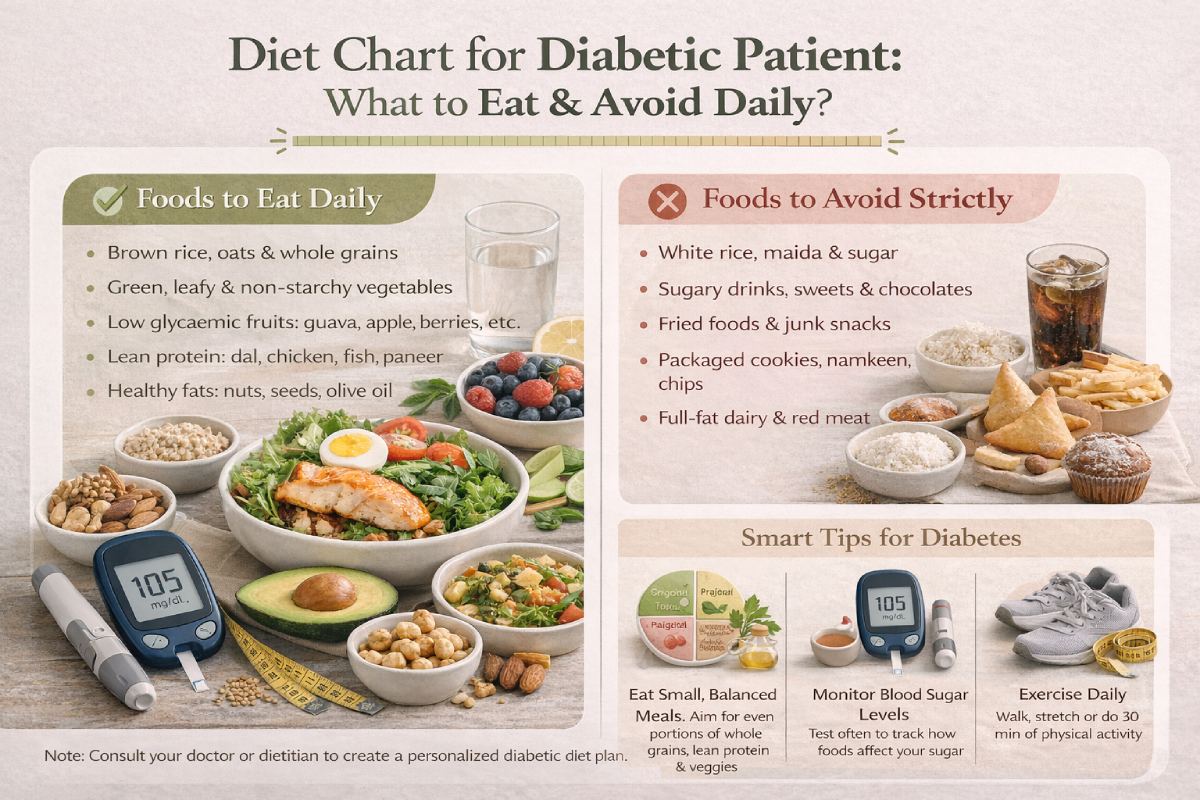
Being diagnosed with diabetes can feel overwhelming, especially when you’re trying to figure out what to eat and what to avoid. If you’ve been searching for a practical diet chart for diabetic patient, you’re in the right place. Managing diabetes doesn’t mean giving up all your favourite foods—it’s about making smarter choices and understanding how different foods affect your blood sugar levels.
Understanding Diabetes and the Role of Diet
Diabetes is a condition where your body either doesn’t produce enough insulin or can’t use it effectively, leading to high blood sugar levels. Whether you have type 1, type 2 diabetes, or prediabetes, your diet plays a crucial role in managing blood glucose levels and preventing complications.
Many people ask, “What is the diet chart for diabetic patient?” Simply put, it’s a balanced eating plan that helps control blood sugar, maintains healthy weight, and provides all necessary nutrients. A healthy diet chart for diabetic patient focuses on portion control, choosing low glycaemic index foods, and eating at regular intervals.
Food for Diabetic Patient: What to Include
Here’s a comprehensive guide on foods that help manage diabetes and reduce sugar levels:
Whole Grains and Complex Carbohydrates
Unlike refined grains, whole grains release sugar slowly into your bloodstream. Include brown rice in limited portions (2-3 tablespoons per meal), oats, jowar, bajra, and ragi rotis, whole wheat bread, quinoa and barley, and daliya (broken wheat).
Proteins
Protein helps stabilize blood sugar and keeps you full longer. Good options include all types of dal (moong, masoor, chana, toor), eggs (boiled or omelette), fish like rohu, pomfret, and salmon, skinless chicken breast, paneer and tofu, Greek curd, and sprouts.
Healthy Fats
Include moderate amounts of healthy fats such as almonds, walnuts, and peanuts, olive oil, mustard oil, or rice bran oil for cooking, flax seeds and chia seeds, avocado when available, and ghee in small amounts (1 teaspoon per meal).
Vegetables (Unlimited)
Most vegetables are low in calories and high in fiber, making them perfect for diabetic patients. Load up on all green leafy vegetables (spinach, fenugreek, amaranth), broccoli, cauliflower, cabbage, beans, capsicum, carrots, ridge gourd (turai), bottle gourd (lauki), bitter gourd (karela—excellent for blood sugar), cucumber, tomatoes, and onions.
Low Glycaemic Fruits
While fruits contain natural sugars, some are better for diabetics. Choose guava, papaya, apple, pear, oranges, sweet lime, berries (when available), and jamun. Avoid or limit mangoes, grapes, chiku, and bananas.
Foods to Reduce Sugar Level
Certain foods have been shown to help lower blood sugar levels naturally. Include fenugreek seeds (methi dana)—soak overnight and drink the water in the morning, bitter gourd juice, cinnamon powder (add to tea or warm water), curry leaves (chew 8-10 fresh leaves daily), Indian gooseberry (amla), and green tea.
Indian Diet Chart for Diabetic Patient
Here’s a practical, easy-to-follow diet chart that you can adapt to your preferences:
Early Morning (6:30-7:00 AM)
- 1 glass of warm water with half a lemon
- 5-6 soaked almonds
- 1 teaspoon soaked fenugreek seeds with water (optional but beneficial)
Breakfast (8:00-8:30 AM)
- 2 small moong dal or oats cheelas with mint chutney OR
- 1 bowl of vegetable upma OR
- 2 boiled eggs with 1 multigrain toast and cucumber slices OR
- 1 bowl of oats with milk (low-fat) and nuts
- Green tea or black coffee without sugar
Mid-Morning Snack (11:00 AM)
- 1 small bowl of papaya or guava OR
- 1 cup buttermilk OR
- A handful of roasted chana
Lunch (1:00-1:30 PM)
- 2 small jowar, bajra, or whole wheat rotis
- 1 bowl of dal (any variety)
- 1 bowl of seasonal vegetable curry (prepared in less oil)
- Cucumber-tomato-onion salad with lemon
- 1 small bowl of curd
- Optional: 2-3 tablespoons of brown rice (not daily)
Evening Snack (4:00-4:30 PM)
- Green tea with 2 sugar-free biscuits OR
- Roasted makhana (foxnuts) OR
- Sprouts chaat with lemon and spices OR
- 1 small bowl of curd
Dinner (7:00-7:30 PM)
- 2 small rotis or 1 bowl of vegetable khichdi
- 1 bowl of dal or vegetable curry
- Grilled fish or chicken (for non-vegetarians)
- Clear vegetable soup
- Salad
Before Bed (9:30 PM – Optional)
1 glass of warm milk (low-fat) with a pinch of turmeric
Indian Vegetarian Diet Chart for Diabetic Patient
If you’re vegetarian, here are some additional protein and nutrient-rich options to include:
Proteins: All varieties of dal, rajma (kidney beans), chana (chickpeas), paneer, tofu, soya chunks (in moderation), curd, and buttermilk.
Snacks: Roasted chana, makhana, dhokla (steamed, not fried), idli with sambar, and vegetable cutlets (baked, not fried).
Main Meals: Mixed dal khichdi, dal palak, chole (chickpea curry with less oil), paneer bhurji, and vegetable pulao with brown rice.
Type 2 Diabetes Diet Chart: Special Considerations
If you have type 2 diabetes, weight management becomes especially important. Follow these additional guidelines:
Practice portion control—use smaller plates to avoid overeating. Never skip meals, especially breakfast, as it can cause blood sugar fluctuations. Eat every 2-3 hours to maintain stable blood sugar. Include fiber in every meal—it slows down sugar absorption. Limit carbohydrates to one-fourth of your plate—half should be vegetables, one-fourth protein. Drink 8-10 glasses of water daily. Exercise for at least 30-40 minutes daily—walking after meals is particularly beneficial.
Foods to Avoid with Diabetes
To keep your blood sugar under control, strictly limit or avoid white rice, maida, and refined flour products, sugary drinks, sodas, packaged fruit juices, sweets, cakes, pastries, chocolates, fried foods like samosas, pakoras, puris, processed and packaged snacks, full-fat dairy products, red meat in excess, coconut and palm oil, and alcohol.
Sugar Patient Food: Reading Labels and Making Smart Choices
When buying packaged foods, always read nutrition labels. Look for hidden sugars—they may be listed as sucrose, fructose, corn syrup, or maltose. Choose products with less than 5g of sugar per serving. Avoid foods with high sodium content. Look for whole grain or multigrain options. Prefer items with high fiber content (at least 3g per serving).
Diet Chart for Diabetic and Kidney Patient
If you have both diabetes and kidney issues, your diet needs extra attention. In addition to managing blood sugar, you must limit protein intake as per your doctor’s advice, reduce salt and sodium, limit potassium-rich foods (bananas, oranges, tomatoes, potatoes), monitor phosphorus intake, and drink the right amount of fluids as recommended by your doctor.
This is a specialized condition, so always work with a qualified dietitian who can create a personalized plan considering both conditions.
How to Prepare Diet Chart for Diabetic Patients: Practical Tips
If you want to customize your own balanced diet chart for diabetic patients, follow these steps:
- Calculate Your Calorie Needs: Based on your age, weight, height, and activity level. A dietitian can help with this.
- Divide Your Plate: Half with non-starchy vegetables, one-quarter with lean protein, one-quarter with complex carbohydrates.
- Time Your Meals: Eat at the same times daily to maintain stable blood sugar.
- Monitor Portion Sizes: Use measuring cups initially until you learn to eyeball portions.
- Keep a Food Diary: Track what you eat and your blood sugar readings to identify patterns.
- Plan Ahead: Prepare healthy snacks in advance to avoid unhealthy choices when hungry.
- Stay Flexible: Allow yourself occasional treats in small portions—complete restriction often leads to binge eating.
- Important Tips for Managing Diabetes Through Diet
- Test Blood Sugar Regularly: Monitor your fasting and post-meal blood sugar levels to understand how different foods affect you.
- Don’t Skip Medication: Diet supports but doesn’t replace diabetes medication. Take your medicines as prescribed.
- Stay Active: Combine diet with regular physical activity for best results.
- Manage Stress: Stress raises blood sugar levels. Practice relaxation techniques like yoga or meditation.
- Get Adequate Sleep: Poor sleep affects insulin sensitivity. Aim for 7-8 hours nightly.
- Stay Hydrated: Sometimes thirst is mistaken for hunger, leading to overeating.
- Eat Mindfully: Chew slowly, avoid distractions while eating, and stop when you’re 80 percent full.
What to Expect from a Healthy Diet Chart for Diabetic Patient
With consistent adherence to a proper diet plan, you can expect better blood sugar control within 2-4 weeks, gradual weight loss if overweight, improved energy levels and less fatigue, reduced risk of diabetes complications, better cholesterol and blood pressure readings, and improved overall well-being.
Remember, everyone’s body responds differently. What works for someone else might need adjustments for you. Regular monitoring and communication with your healthcare team are essential.
Final Thoughts
Living with diabetes doesn’t mean living with constant restrictions and deprivation. A well-planned diet chart for diabetic patient is about balance, variety, and making informed choices. The goal is to nourish your body while keeping blood sugar levels stable.
Start with small changes. You don’t need to overhaul your entire diet overnight. Maybe begin by replacing white rice with brown rice, or swap sugary snacks for healthier alternatives. Each small step counts and builds towards better health.
If you find meal planning overwhelming or struggle to control your blood sugar despite eating healthy, consider consulting a qualified dietitian. They can create a personalized diet chart considering your food preferences, lifestyle, medical history, and specific needs.
Important Disclaimer: This diet chart is for general guidance only. Diabetes management is highly individual. Always consult your doctor or a certified diabetes educator before making significant dietary changes. Monitor your blood sugar levels regularly and adjust your diet and medication as advised by your healthcare provider.
Take charge of your health today—your body will thank you for it!