Living with PCOD can feel overwhelming, especially when you’re trying to manage your weight. If you’ve been searching for a proper PCOD diet chart for weight loss, you’re not alone. Many women struggle with this hormonal condition, and the good news is that the right diet can make a significant difference in managing symptoms and achieving a healthy weight.
What is PCOD and Why Diet Matters?
PCOD, or Polycystic Ovarian Disease, is a hormonal disorder that affects many women during their reproductive years. It causes irregular periods, weight gain, excess hair growth, and can make losing weight quite challenging. However, the relationship between PCOD and diet is quite strong—what you eat directly impacts your insulin levels, hormone balance, and ultimately, your weight.
Can PCOD be controlled by diet and exercise? Absolutely yes! While PCOD cannot be completely cured, it can be managed effectively through proper nutrition and regular physical activity. A well-planned diet for PCOD patients can help regulate hormones, improve insulin sensitivity, and support healthy weight loss.
Understanding PCOD Diet: The Basics
What is PCOD diet exactly? A PCOD diet focuses on foods that help balance blood sugar levels, reduce inflammation, and support hormone regulation. It’s not about extreme restrictions but rather making smarter food choices that work with your body, not against it.
The key principles of a diet for PCOD problem include eating low glycaemic index foods, choosing lean proteins, incorporating healthy fats, and avoiding processed foods and refined sugars. This approach helps manage insulin resistance, which is common in PCOD patients.
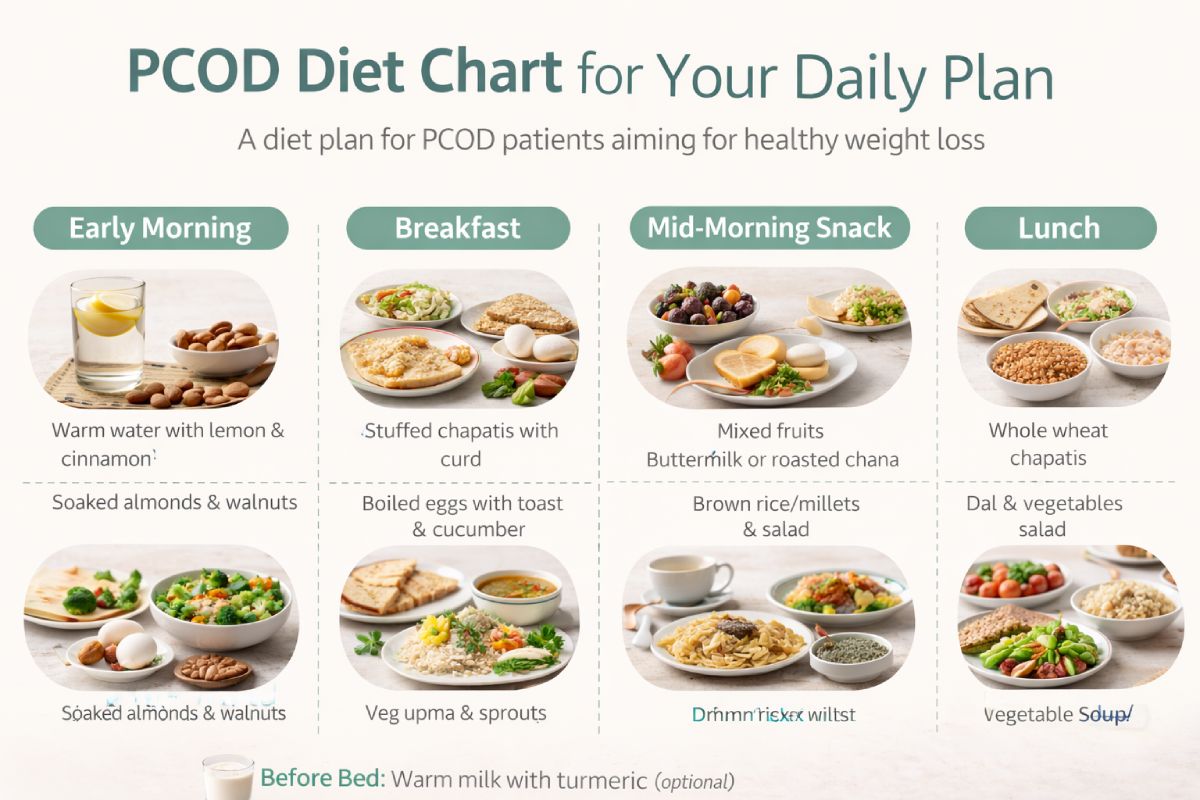
PCOD Diet Chart for Weight Loss: Your Daily Plan
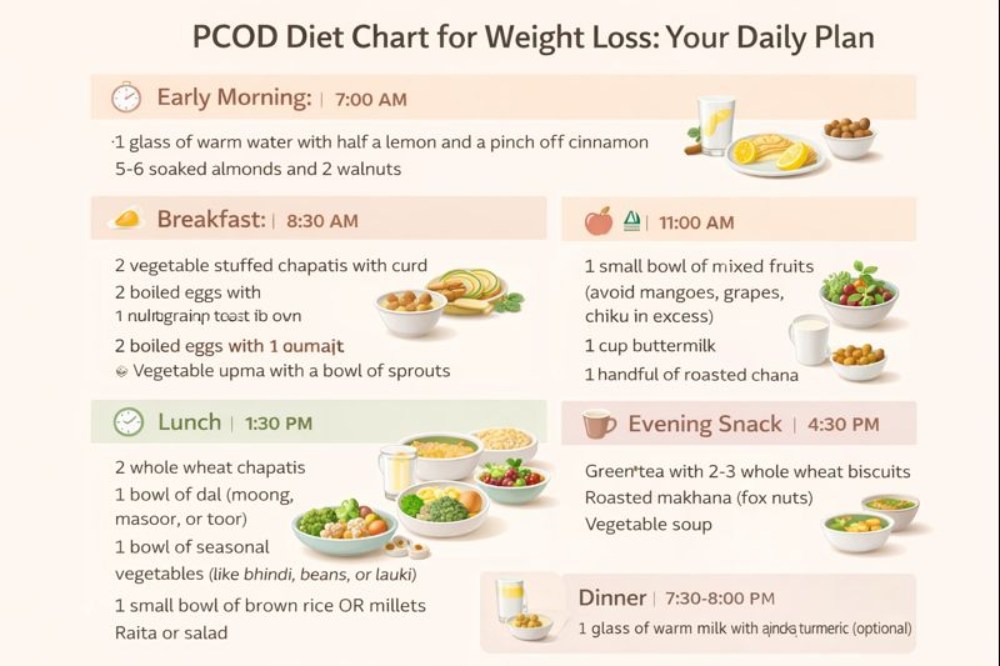
Here’s a practical diet chart for PCOD patients looking to lose weight. Remember, this is a guideline—you can adjust portions based on your activity level and individual needs.
Early Morning (7:00 AM)
- 1 glass of warm water with half a lemon and a pinch of cinnamon
- 5-6 soaked almonds and 2 walnuts
Breakfast (8:30 AM)
- 2 vegetable stuffed chapatis with curd OR
- 2 boiled eggs with 1 multigrain toast and cucumber slices OR
- Vegetable upma with a bowl of sprouts
- Green tea or black coffee (without sugar)
Mid-Morning Snack (11:00 AM)
- 1 small bowl of mixed fruits (avoid mangoes, grapes, chiku in excess)
- 1 cup buttermilk OR
- 1 handful of roasted chana
Lunch (1:30 PM)
- 2 whole wheat chapatis
- 1 bowl of dal (moong, masoor, or toor)
- 1 bowl of seasonal vegetables (like bhindi, beans, or lauki)
- 1 small bowl of brown rice OR millets
- Raita or salad
Evening Snack (4:30 PM)
- Green tea with 2-3 whole wheat biscuits OR
- Roasted makhana (fox nuts) OR
- Vegetable soup
Dinner (7:30-8:00 PM)
- 2 chapatis or 1 bowl of dal khichdi
- 1 bowl of mixed vegetable curry
- Grilled chicken or paneer (for protein)
- Cucumber or carrot salad
Before Bed (10:00 PM)
- 1 glass of warm milk with a pinch of turmeric (optional)
PCOD Diet Food Chart: What to Include
When planning your PCOD pcos diet plan, focus on these food groups:
Complex Carbohydrates
- Brown rice, quinoa, oats
- Whole wheat, jowar, bajra, ragi
- Sweet potato, pumpkin
Lean Proteins
- Eggs, chicken breast, fish
- Paneer, tofu
- Dals, legumes, sprouts
Healthy Fats
- Almonds, walnuts, flax seeds, chia seeds
- Olive oil, coconut oil, ghee (in moderation)
- Avocado (when available)
Vegetables and Fruits
- All green leafy vegetables
- Broccoli, cauliflower, cabbage, capsicum
- Berries, apples, pears, oranges, guava
Foods to Avoid in Your Diet Plan for PCOD
Equally important as knowing what to eat is understanding what to limit or avoid:
- White bread, maida products, refined flour items
- Sugary drinks, packaged fruit juices, sodas
- Fried foods, processed snacks, chips
- Excessive sweets, cakes, pastries
- Red meat in large quantities
- High-fat dairy products
Can I Follow Keto Diet on PCOD?
This is a common question many women ask: can we follow keto diet on PCOD? While some studies suggest that a low-carb, high-fat diet can help with insulin resistance and weight loss in PCOD, it’s not suitable for everyone. The keto diet is quite restrictive and can be difficult to maintain long-term.
A moderate low-carb approach is usually better for most PCOD patients rather than going completely keto. It’s always best to consult with a nutritionist or dietitian who can customise a plan based on your specific needs and lifestyle.
Do Eggs Increase PCOD Symptoms?
Many women wonder, ‘Do egg diet will increase PCOD?’ The answer is no—eggs don’t worsen PCOD. In fact, eggs are an excellent source of protein and can be part of a healthy PCOD diet plan for weight loss. They help keep you full, stabilise blood sugar levels, and provide essential nutrients. Just make sure to consume them boiled or poached rather than fried.
Can I Do PCOD Diet in Cyst?
If you’re diagnosed with cysts, following a proper PCOD diet is actually beneficial, not harmful. The right diet can help reduce inflammation, balance hormones, and potentially reduce the size of cysts over time. There’s no specific ‘diet for cysts’—the general PCOD diet chart for weight loss works well for managing cysts too.
Lifestyle Tips Along with Your PCOD Diet Plan for Weight Loss
Diet alone isn’t enough. Here are some additional tips to manage PCOD effectively:
- Exercise regularly—at least 30-45 minutes of moderate activity five days a week. Walking, yoga, swimming, and strength training all work well.
- Sleep for 7-8 hours every night. Poor sleep can worsen hormonal imbalance.
- Manage stress through meditation, deep breathing, or hobbies you enjoy.
- Stay hydrated—drink at least 8-10 glasses of water daily.
- Avoid skipping meals, especially breakfast. Eat at regular intervals.
- Monitor your progress but don’t obsess over the weighing scale. Track how you feel—energy levels, mood, period regularity.
Final Thoughts
Managing PCOD through diet isn’t about perfection—it’s about making consistent, healthy choices. The diet chart for PCOD patient outlined above is a starting point. Listen to your body, make adjustments as needed, and don’t hesitate to seek professional guidance.
Remember, every woman’s body responds differently. What works perfectly for someone else might need tweaking for you. Be patient with yourself, celebrate small wins, and know that with the right approach to nutrition and lifestyle, you can manage PCOD symptoms effectively and achieve your weight loss goals.
If you’re struggling with PCOD and need personalised guidance on diet and exercise, consider consulting with a qualified dietitian or nutritionist who specialises in hormonal disorders. They can create a customised diet plan for PCOD that fits your lifestyle, preferences, and health goals.
Stay consistent, stay positive, and remember—you’ve got this!