Ever get up in the morning with a stiff neck and shoulder pain such that turning your head is difficult?
The small amount of stiffness in the neck can become a pain. Maybe you were lying in an awkward position, sitting too long at your desk, or constantly checking your mobile phone.
This is the “old” pain, the dull ache, that’s the “old” shoulder, or it takes a lot of effort at the end of the day to move the shoulder.
That’s where exercise for cervical pain in neck and shoulder may come in handy, provided that it is performed gently and properly.
Use of proper movement skills can reduce tightness in muscles, enhance flexibility, and maintain a good posture. One should also keep in mind that the cervical exercises for neck pain do not involve pushing the neck to move more than is appropriate. They are concerned with improving its mobility, reducing strain, and more control.
Why Neck Exercises Matter
If the neck remains stiff for an extended period, the muscles around the neck begin to tighten and guard. This can radiate into the shoulders and upper back, making it feel bigger than it is. A simple exercise for cervical pain in neck and shoulder routine can help stop that vicious cycle and gradually alleviate the pain.
- It may reduce muscle tightness.
- It may improve blood flow.
- It may support better posture.
- It may help the neck feel less “stuck.”
Gentle Moves that Help
When it comes to which exercise is best for cervical pain, most of the time it will be the one that feels well controlled, simple, and safe. Chin tucks, shoulder rolls, neck tilts, and slow rotations work well for most. These are usually the basic what are the exercises of cervical pain and neck pain to help improve mobility without aggravating it.
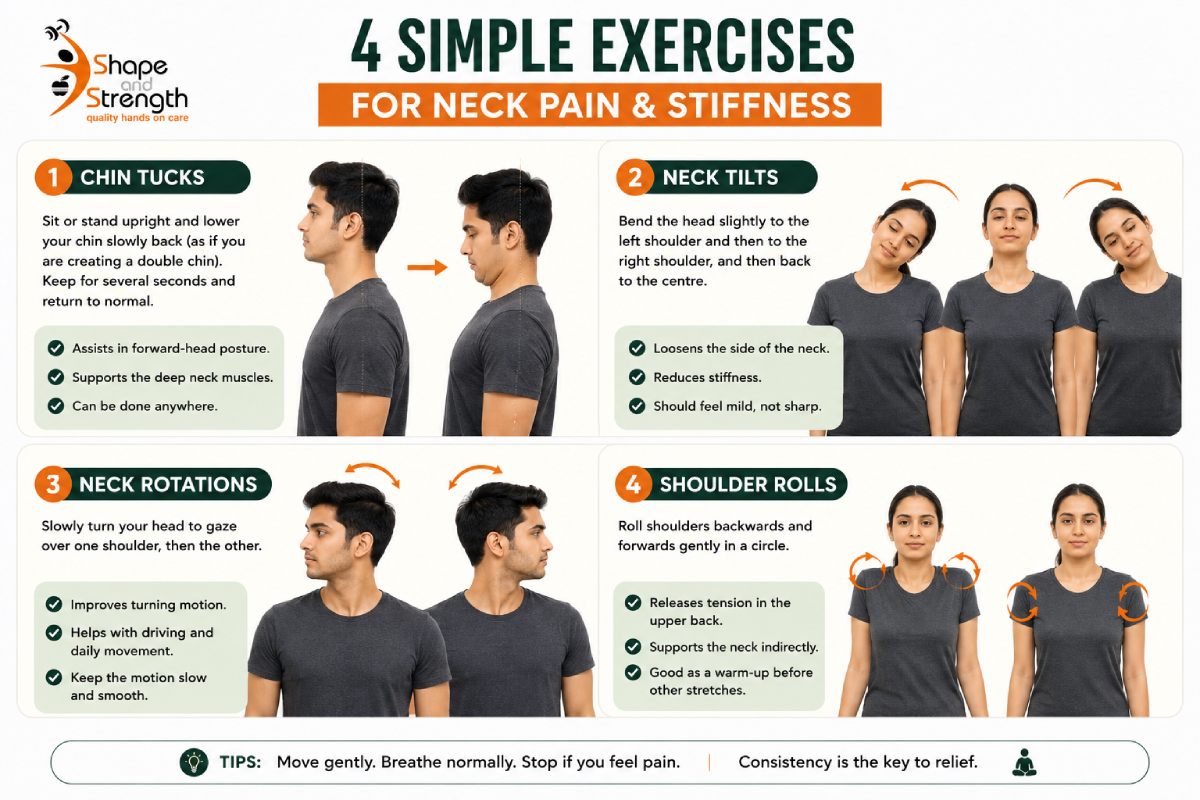
1. Chin tucks
Sit or stand upright and lower your chin slowly back (as if you are creating a double chin). Keep for several seconds and return to normal.
- Assists in forward-head posture.
- Supports the deep neck muscles.
- Can be done anywhere.
2. Neck tilts
Bend the head slightly to the left shoulder and then to the right shoulder, and then back to the centre.
- Loosens the side of the neck.
- Reduces stiffness.
- Should feel mild, not sharp.
3. Neck rotations
Slowly turn your head to gaze over one shoulder, then the other.
- Improves turning motion.
- Helps with driving and daily movement.
- Keep the motion slow and smooth.
4. Shoulder rolls
Roll shoulders backwards and forwards gently in a circle.
- Releases tension in the upper back.
- Supports the neck indirectly.
- Good as a warm-up before other stretches.
A Simple Routine to Follow
If you are asking what exercise to do in cervical pain, start small. A short, regular routine is often better than doing too much once and then stopping. A basic best exercise for cervical pain plan can include a few minutes of movement in the morning and again later in the day.
- 10 chin tucks.
- 10 shoulder rolls.
- 5 slow neck rotations on each side.
- 5 gentle side tilts on each side.
This kind of exercise for cervical pain in neck and shoulder routine is easy to remember and does not need equipment. It can also be adjusted based on how your body feels that day.
Can Exercise Really Help?
So many people wonder how to cure cervical pain by exercise, but it would be better to ask how to do it properly. While exercise helps to loosen up areas that might be tight and improve motion, it does best when combined with posture care, rest and appropriate guidance. Cervical neck exercises to relieve pain is a component of a comprehensive rehabilitation program.
- Better posture matters.
- Screen breaks matter.
- Sleep position matters.
- Regular movement matters.
Walking and Neck Pain
A lot of people also wonder what exercise are there for cervical neck pain beyond neck stretches. One easy way to do this is walking. It is a movement of the body; it decreases general stiffness and relaxes the shoulders. If the neck is tight, walking might be beneficial, but if it is painful, it should not be used. Learn more about the benefits of walking if you want to understand how regular walking supports your overall health and mobility.
What not to Do
You need to know what not to do just as much. If you’re wondering about how to cure cervical pain by exercise, don’t immediately start with quick and hard neck circles or vigorous upper-body exercises. This can aggravate neck conditions instead of easing pain.
- Do not push your head into painful ranges.
- If it hurts, don’t stretch the neck for too long.
- Don’t dismiss any arm numbness or tingling sensations.
- Avoid maintaining bad posture for extended periods of time without a break
Why Consultation Matters
Consultation is important prior to beginning any exercise for cervical pain in neck and shoulder. Simple muscle tightness or any postural, disc, or nerve irritation problem can be responsible for neck pain. A professional can help you to understand what’s the safest way to go about it and determine if exercise is enough or if you need additional support.
It is particularly helpful if you want to know best exercise for cervical pain or what exercise to do in cervical pain for your own body. The right check may stop you performing the wrong movement and exacerbating the pain.
Frequently Asked Questions
Which exercises are best to perform for neck pain?
One of the best beginning exercises is chin tucks since they assist in improving the posture of the neck and also aid the deep muscles of the neck.
Are walks a good remedy for neck pain?
Walking may help to loosen stiffness and aid movement (as long as it does not make the pain worse).
What not to do in cervical pain?
Do not make exaggerated neck movements, lift heavy objects, or change positions for a long time.
Conclusion
When pain in the neck and shoulder area begins to hinder your daily activities, the right exercise for cervical pain in neck and shoulder could make a world of difference. The neck gradually becomes free and relaxed with gentle movements, regular practice and proper posture habits. When it comes to the best exercise to do when you are still not sure, the best way to go about it is to start with easy and controlled exercises, and proceed with caution if needed, with cervical pain.