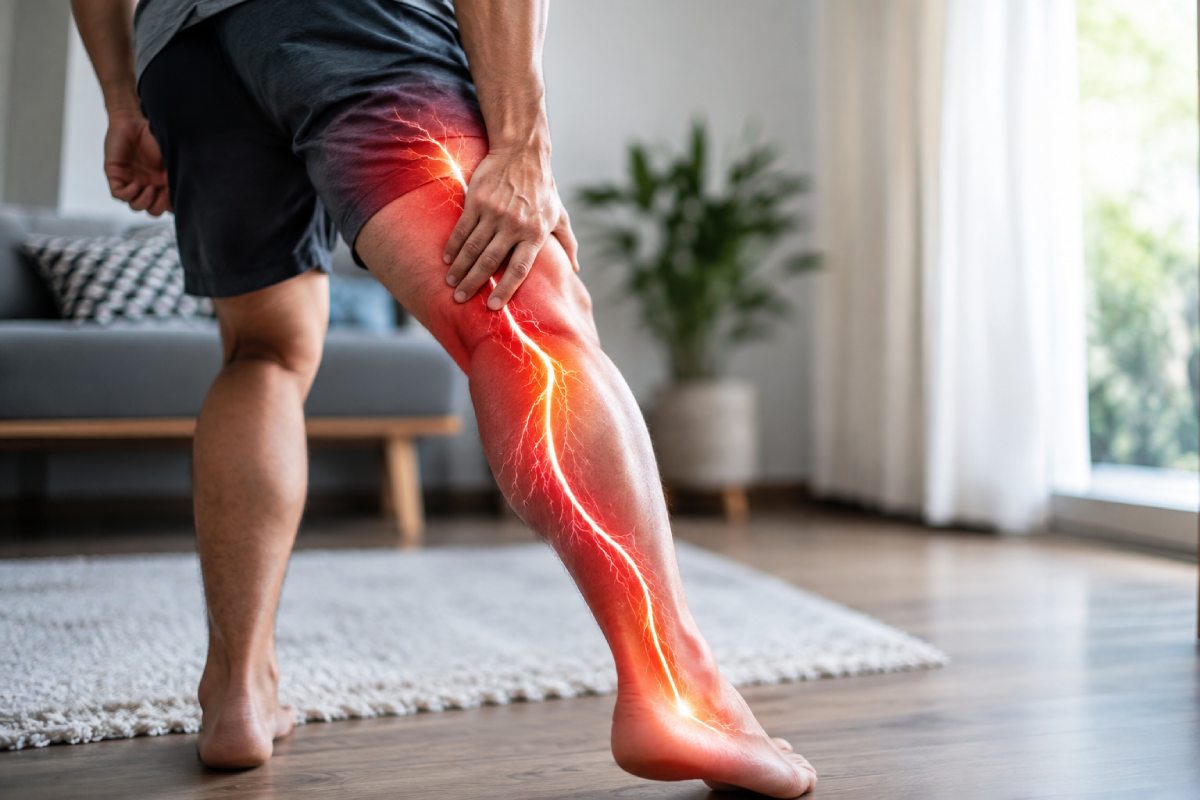
Electric shock pain in legs is brief, sharp, and shooting leg pain that may feel like a jolt moving down the leg? It can occur when a nerve is irritated, compressed, or damaged, most often as a result of an issue in the lower back, like sciatica.
This kind of pain is not like ordinary muscle pain. May occur suddenly, run from the buttock or thigh down to the foot and occasionally cause tingling, numbness or ,burning.
How Does Electric Shock Pain in Legs Feel?
Electric shock pain in legs may be described as a sudden shock, lightning bolt, or a jolt. This can be a second time or it can persist as a burning, stabbing pain.
Common descriptions include:
- An abrupt push from the buttock down the back of the leg.
- A sharp, stabbing pain in the thigh, calf, or foot.
- Pain, burning, or a tingling legs or sensation down the leg.
- Worsening pain with coughing, sneezing, bending or sitting for extended periods of time.
Why does it happen?
If the pain in legs is electric in nature, it’s a sign of an issue with a nerve. It’s most often caused by a compressed or irritated sciatic nerve or its nerve roots in the lower back, a condition known as sciatica.
Other causes include:
- Herniated or slipped disc that is compressing a nerve.
- Narrowing of the spinal canal (spinal stenosis).
- Bone spurs or arthritis in the spine.
- Irritation of the sciatic nerve by a muscle in the buttock (piriformis syndrome).
- Diabetes or other conditions may be associated with peripheral neuropathy.
You May Like Also: Can Physiotherapy Cure Sciatica? How Treatment Works For Pain Relief
Is It Sciatica or Something Else?
One of the most common causes of electric shock pain in legs the is sciatica. Typically it ,occurs in one leg and runs along the course of the sciatic nerve, from the lower back to the buttock and down the leg.
But not all leg pain is sciatica. Other possibilities include:
- Burning legs or tingling legs in the lower legs and feet (peripheral neuropathy).
- Meralgia paresthetica – a condition on the outer thigh.
- Strain or injury of the muscles.
- Less common but blood flow problems.
What Are The Red Flags?
While most electric shock pain in legs is not an emergency, some symptoms require emergency care.
If you have any of these, please seek assistance immediately:
- Significant weakness of one or both legs, developing quickly.
- Inability to control bladder or bowel.
- Pins and needles in the groin or the inside of thighs.
- Extremely painful and worsening pain following injury.
- Fever, unexplained loss of weight, or a history of cancer.
What Are The Symptoms of The Disease?
A doctor or physiotherapist will ask some questions regarding your symptoms, and then do a physical examination. They will examine your reflexes, strength, and sensation in your legs.
Imaging tests such as an MRI may be used to detect if a disc or bone is impinging on a nerve, if necessary. If a condition such as diabetes is suspected, blood tests may be carried out.
The signs or symptoms that a Clinician will watch for.
The clinician will ask questions during the consultation include:
- Where is the pain located—low back, buttock, thigh, calf or foot?
- Where do you feel the pain exactly? In your low back, buttock, thigh, calf or foot?
- Is it in one or both legs?
- Is Your pain in one leg only or both the legs?
- Do you feel sharp, burning, tingling, numb or weak?
- Does doing anything makes it worse like sneezing or bending or sitting down?
- When was the first time you experience it and has it evolved over time?
Physical Examination
Clinician assesses the nerve pain in legs, muscle, and joint function of the legs. Typically involves assessing reflexes, muscle strength, sensation, balance and coordination. .
What Can You Do at Home?
If the pain is mild, there are a couple of simple steps you can take to alleviate the pain of electric shock to the legs.
- Avoid activities which aggravate the pain, including heavy lifting and extended sitting.
- Heat or icing the back of the legs (lower back) or the affected area.
- Do some mild stretching on the lower back and hamstring muscles.
- Do not follow a sedentary lifestyle unless this makes you more painful.
- Maintain good posture when sitting or standing.
Some pains are hard to leave behind and if yours is one of them don’t sit around go and see a professional. If you find it necessary, then go for a structured programme of physiotherapy and rehabilitation.
Frequently Asked Questions
Q1. Why is electric shock pain in legs occur?
The most common reason behind sciatica is a pressure on the sciatic nerve due to bone spurs or a herniated disc in the lower back. Peripheral neuropathy and muscle/joint conditions are other causes of leg pain.
Q2. When do I need to seek medical care regarding my leg pain?
If your pain doesn’t go away or keep increasing then you should take advice from doctors. Also if your pain is constantly hurting you with symptoms like numbness, weakness and/or changes in bladder/bowel habits. This symptoms could indicate more serious issue.
Q3. Can you get electric shock pain in the legs treated at home?
But in case the symptoms are not severe, you may try to relieve the pain through such methods as rest, heating/cooling, stretching and avoiding the triggers. However, if the pain doesn’t subside or is rather severe, make sure to call for professional help.
Q4. What is peripheral neuropathy? What does peripheral neuropathy mean?
It is when one damages the nerves that are located outside the brain and spinal cord. If you have that then, you may also experience a burning sensation, tingle or electric shock kinda pain, commonly around your legs and feets. A common cause is diabetes.
Conclusion
A condition of electric shock in the leg may be a symptom of nerve irritation or radiating pain. There are other conditions that can provoke the same symptoms as sciatica and it’s a very common cause. If you are wondering when to seek help or as people because of how pain manifests itself, any excess symptoms or the duration of time the pain lasts. If your pain is severe, constant or associated with signs/symptoms, do not delay, seek assistance.