Thinking about giving up your favourite Bengali dishes? Stop right there; you don’t have to stop having them just to lose weight. A Sustainable Weight loss plan is one plan which can be adopted by people in Kolkata to get rid of some weight in their everyday lifestyles.
What is the Best Indian Diet Plan for Losing Weight in Kolkata?
What is the best Indian diet plan for losing weight with meal delivery options? The “best” plan is one that matches your calorie needs, includes enough protein and vegetables, uses familiar Indian foods, and can be followed consistently.
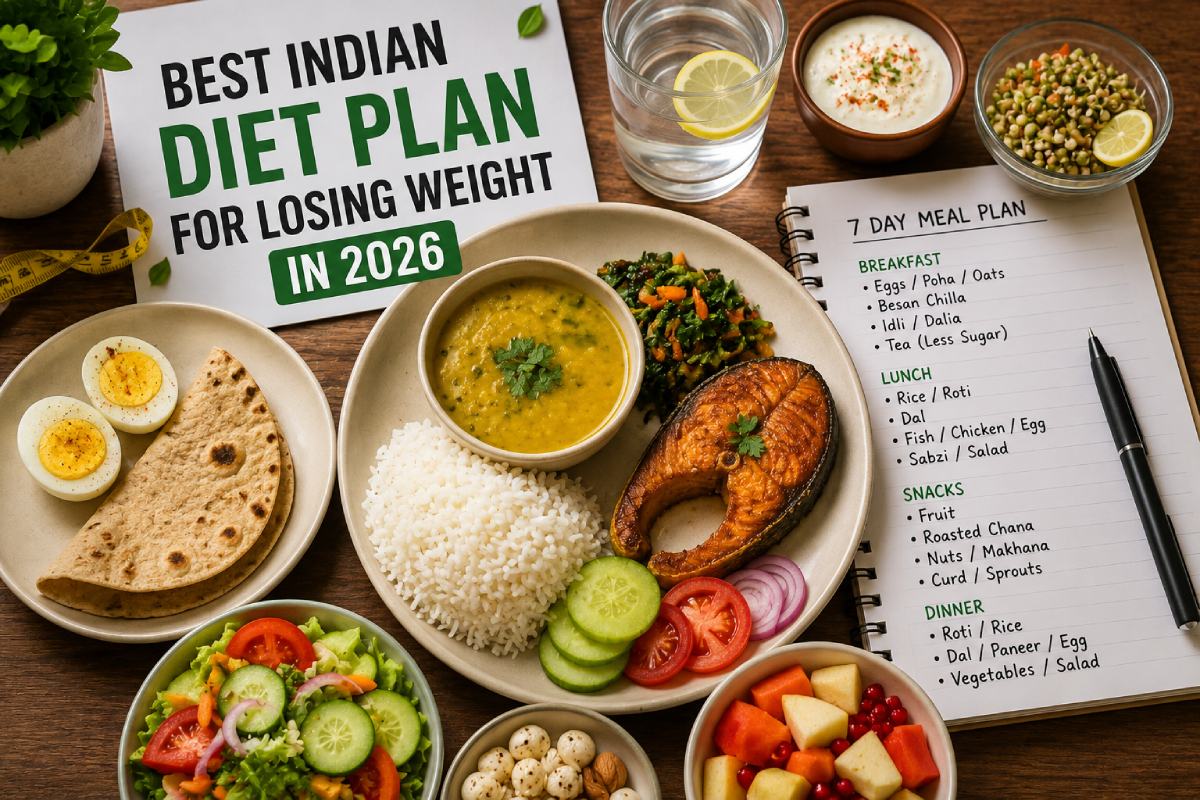
A simple weight-loss plate can be:
- ½ plate: vegetables and salad
- ¼ plate: protein such as fish, chicken, eggs, dal, paneer or curd
- ¼ plate: rice or roti
- A controlled amount of cooking oil
Best breakfast options
Good options for breakfast includes:
- 2 eggs + 1–2 rotis + vegetables
- Vegetable oats + curd
- Vegetable poha + boiled egg
- Besan chilla + curd
- Idli + sambar
- Dalia + milk or curd
- Roti + egg or paneer bhurji
You do not have to stop drinking tea. Just watch the sugar and what you eat with it. Tea with several biscuits can add extra calories quickly.
What About Evening Tea and Snacks?
For many people, evening snacks are where extra calories build up.
Instead of regularly having tea + biscuits + singara + sweets, try:
- Fruit
- Curd
- Roasted chana
- Boiled eggs
- Sprouts
- A small portion of nuts
- Makhana
You can still have a singara occasionally. It does not need to become a daily habit.
Eating Out!
You can still eat out occasionally. You don’t have to stop treating yourself.
If you are having biryani or another heavier meal in Kolkata:
- Control the portion
- Add vegetables or salad where available
- Skip dessert if you do not need it
- Stop when comfortably full
You do not need to starve yourself the next day! Eat healthy the next day.
How Much Protein Should I Eat?
Protein helps maintain muscle and can make meals more filling. Pair protein with crabs.
Indian vegetarian diet plan for rapid weight loss:
- Dal
- Chana
- Rajma
- Paneer
- Curd
- Milk
- Soy and tofu
For non-vegetarians, you can build effective Indian non-vegetarian meal ideas for shedding kilos around everyday like:
- Grilled or lightly curried fish
- Egg bhurji
- Chicken curry
Your personal protein requirement depends on factors such as body weight, age and activity.
Common Weight-loss Mistakes
Cutting rice completely
Removing rice may make your diet harder to follow without fixing excessive calorie intake.
Eating too little protein
A meal can look healthy while still being mostly rice, roti or vegetables. But your body needs protein too.
Ignoring cooking oil
Oil is easy to underestimate. Measuring it can help control calories.
Diets To Avoid
Be careful with diets that rely on:
- Completely removing rice
- Eating only fruit
- Juice detoxes
- Very low-calorie eating
Be careful before trying new diets
How Quickly Can I Lose Weight?
Gradual weight loss is generally easier to maintain than rapid loss. The CDC describes around 1–2 pounds per week as a commonly recommended gradual pace, while ICMR-NIN also advises gradual weight reduction. Your actual rate can vary based on your starting weight, activity, diet, medications, and health conditions.
What Exercise Should I Start With?
Start with something easy to not strain your body. You can start with:
- Walking
- Strength training
- Cycling
- Swimming
- Sports
- A structured gym programme
Useful Professional Guidance
Professional guidance may be useful if:
- You have a significant amount of weight to lose
- You repeatedly regain weight
- You have diabetes or another medical condition
- You have dietary restrictions
- You train regularly and want to preserve or build muscle
- You are unsure how much food you need
- You want a plan based around your normal Bengali or Indian meals
When you’re not in the mood to cook a meal yourself, you may be asking yourself, which Indian diet delivery services offer weight loss meal plans?
In cities such as Mumbai, Bengaluru and Delhi, there are a number of companies that now provide calorie-counted, high-protein Indian meal subscriptions for weight loss, both vegetarian and non-vegetarian.
For people looking for a personalized diet plan in Kolkata, Shape and Strength provides customized diet and weight-management plans, including online diet and nutrition consultations.
Dr. Yogitaa Mandhyaan is the driver of its nutrition service.
Frequently Asked Questions
Can I eat mishti while losing weight?
Yes, but keep it occasional and control the portion.
You do not need to think, “I can never eat mishti again.” A better approach is simply not having it every day.
Can I eat rice and still lose weight?
Yes. Rice itself does not prevent weight loss. The amount you eat and what you eat with it matter more.
A better Bengali lunch could be:
- 1 moderate serving of cooked rice
- 1 bowl dal
- 1 piece of fish
- 1–2 servings of vegetables
- Salad
Can I eat roti at night?
Yes. Eating roti at dinner does not automatically cause weight gain. For example:
- 2 rotis + fish curry + vegetables
- 2 rotis + egg curry + salad
- 2 rotis + dal + paneer + vegetable.
Best Indian diet plans for weight loss recommended by nutrition services?
Have a proper diet with vegetables; pair it with:
- Chicken curry with rice or roti
- 2 eggs + 1–2 rotis + vegetables
- Roti + egg or paneer bhurji
- Grilled or lightly curried fish with rice
Conclusion
The best Indian Diet Plan to lose weight suggests avoiding too much rice or roti, having sufficient protein, sufficient vegetables, measuring cooked oil as per requirement, having sweets or fried snacks occasionally, and having meals from restaurants occasionally.
How to find a certified nutritionist for an Indian weight loss diet?
Look for qualified professionals (RD, MSc Clinical Nutrition/Dietetics, or other recognised qualifications) with experience in weight management and understanding of Indian/Bengali eating habits.